Wakefield Artist, Illustrator, and Women’s Rights Advocate
Barbara Woodward née Briggs (1887–1976) was a Wakefield-born watercolourist, illustrator, Fellow of the Zoological Society of London and trailblazer for Canadian women’s employment rights. Her artwork was exhibited at the Royal Scottish Academy and the Society of Women Artists, and her illustrations of British birds were used in schools across Britain.
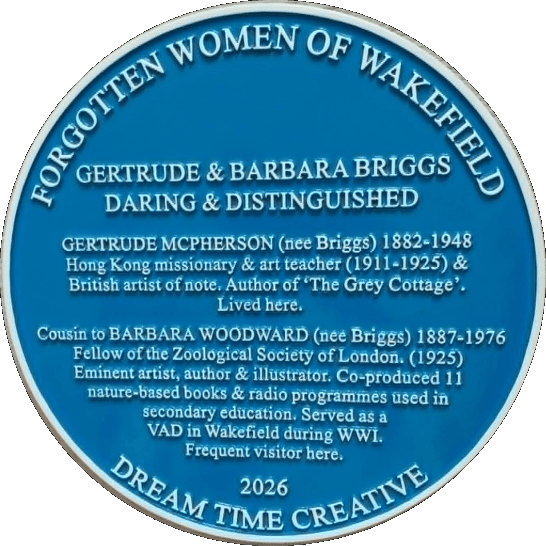
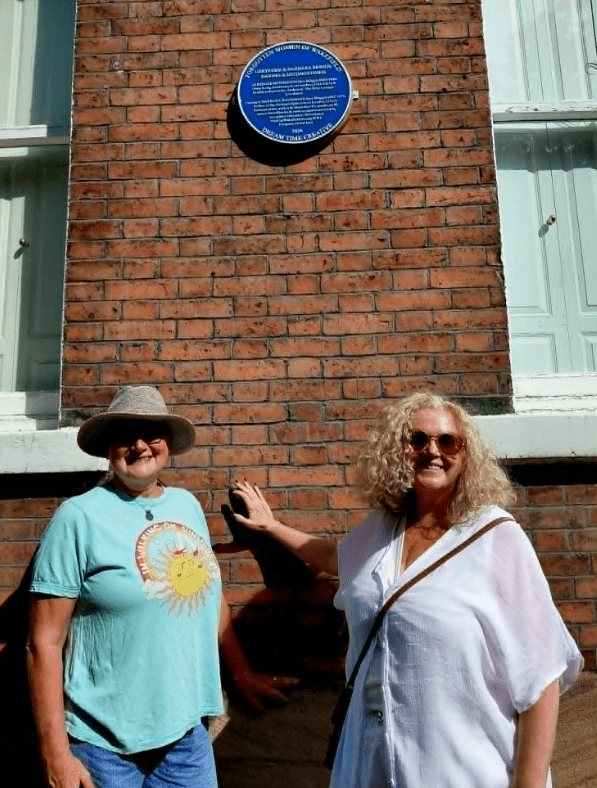
In August 2026, she and her cousin Gertrude were recognised with a Forgotten Women of Wakefield blue plaque at 9 South Parade.
Written by Sarah Cobham based on the research of Sarah Cobham, Helga Fox and Lorraine Simpson. With special thanks to Gordon Briggs for access to family archives.
Barbara Briggs: Daring and Distinguished
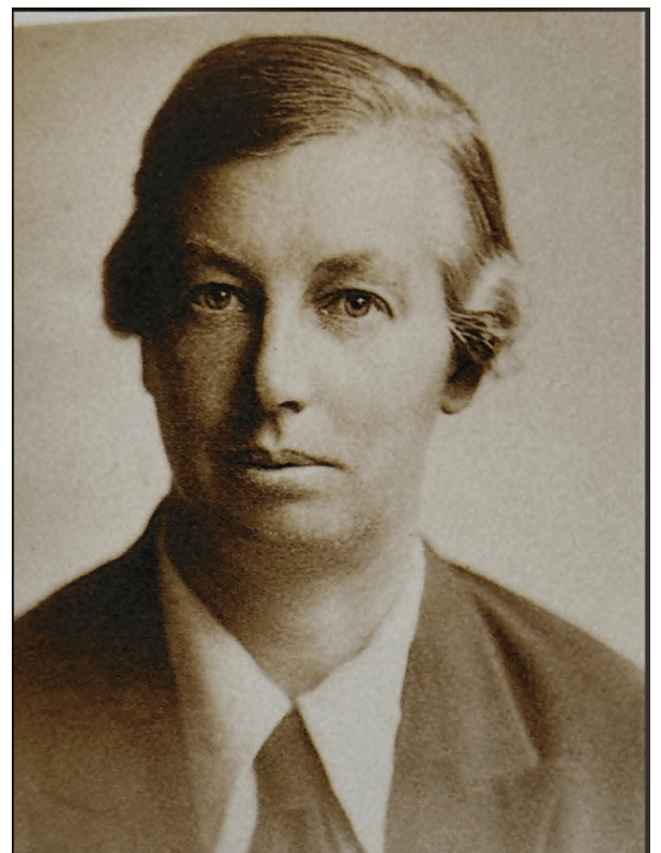
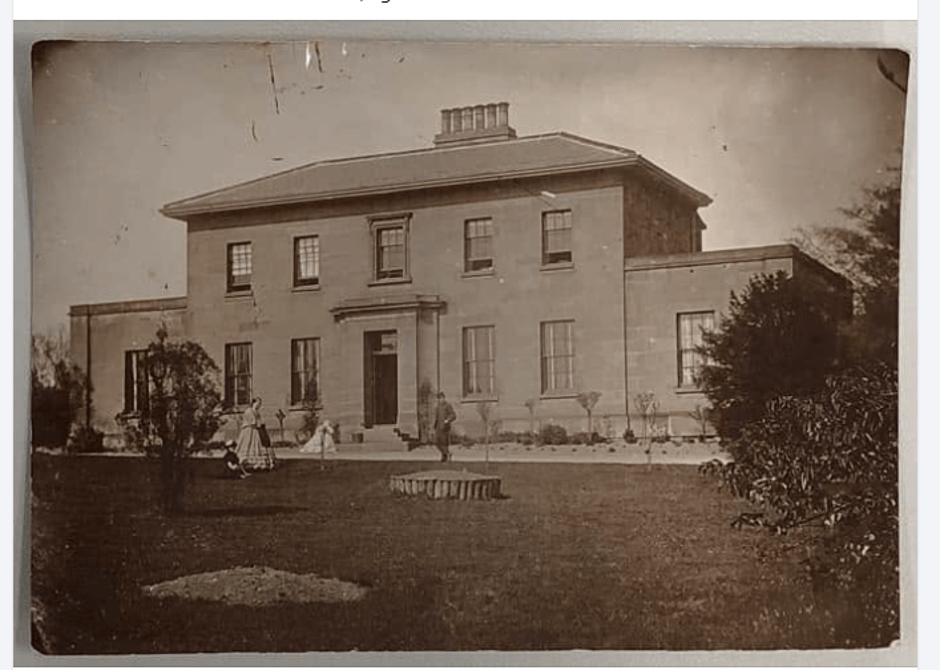
As the granddaughters of Isaac Briggs, a pioneering engineer engaged in railway and canal construction across England whose friendships included Stephenson and Brunel, Barbara and her cousin Gertrude were part of “a highly respectable and opulent family, of St. John’s, Wakefield.” (The Glossop Record 8th June 1867)
They also benefited from the interests of their grandmother’s family, the Shaws, who were deeply involved in philanthropic and medical advancement in Wakefield.
Before Barbara Briggs emigrated to Canada in 1925 and married Edward Woodward in 1938, she had become an established and esteemed painter linked to an extensive network of artists, authors and fellows of the Zoological Society of London.
Once she arrived in Victoria, British Columbia, Canada, she became actively involved in the local Business and Professional Women’s Club. As a Director during 1947–48, she was at the forefront of the campaign for women’s rights in the workplace.
Barbara Briggs, Wakefield Artist
Born in Wakefield, Barbara Briggs had a talent for and interest in observational, detailed art. She first gained recognition in 1906, when the Technical and Art School in her home city awarded her 2nd class in anatomy. Barbara thrived as a member of Wakefield Girls’ High School’s headmistress Gertrude McCroben‘s Literary Society. This linked her to formidable women from Wakefield who were campaigning locally, regionally and nationally for advancements in women’s health care, education and equal suffrage.
Her first love, however, was art and she was a member of the Yorkshire Union of Artists. In the years leading up to the First World War, Barbara exhibited widely. She made a name for herself as an exemplary watercolourist of landscapes with a penchant for her “several clever humorous watercolours.” (Sheffield Independent, 12 June 1916)
First World War Artist
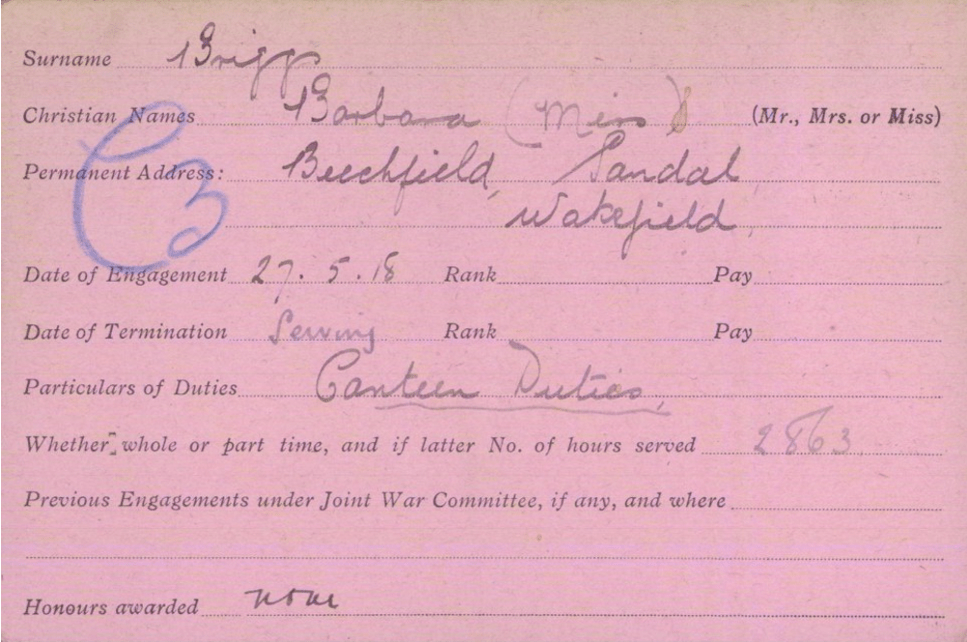
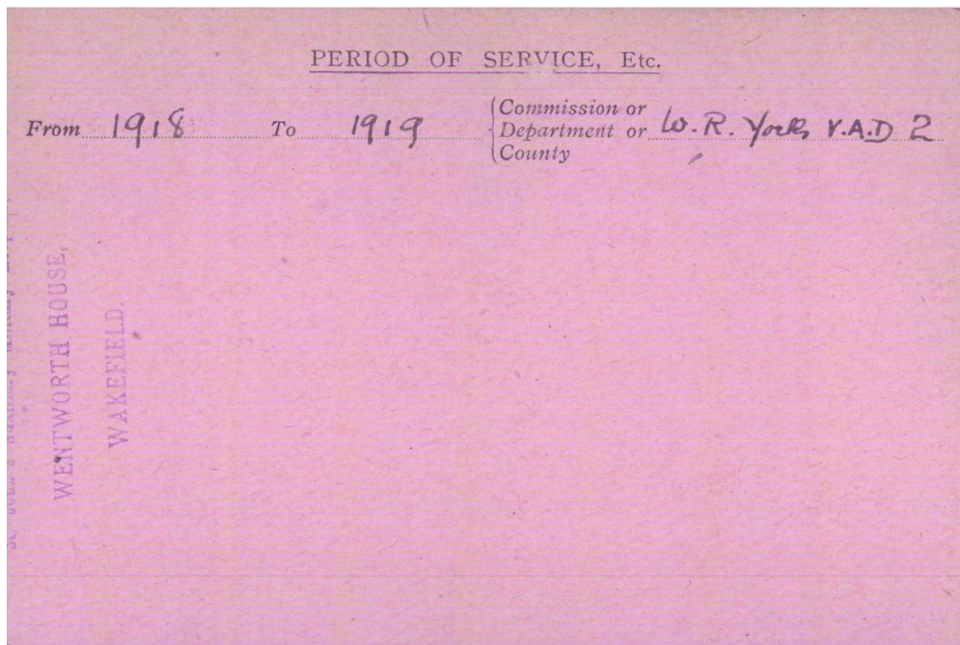
The First World War called on many women to support the war effort at home. Barbara worked as a Voluntary Aid Detachment in the canteen of Wentworth House. In 1917, Clayton Hospital took over the building as an extension and used it as a Military War Hospital. However, this did not prevent her from submitting to exhibitions further afield.
Extraordinarily, her painting, “Still Life,” was on display at the Royal Scottish Academy annual open exhibition in 1919. By 1922, The Society of Women Artists. had accepted three pieces of her artwork. These were , “Aysgarth”, “Still Life”, and “Silvery Sunshine”. The SWA was, and remains, a highly prestigious society that celebrates and promotes fine art created by women.
Collaboration and Commercialism in Art
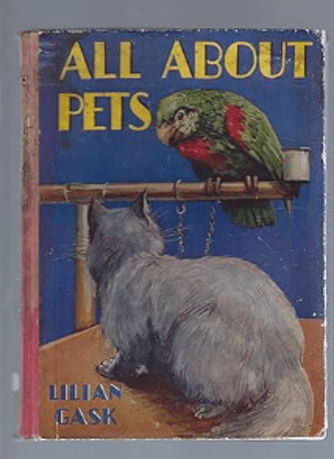
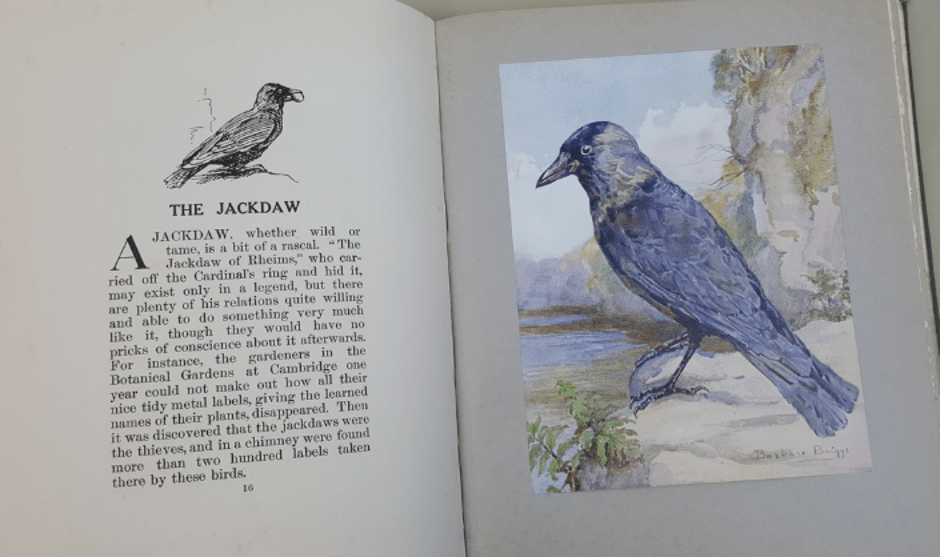
It was around this time that Barbara began to collaborate with writers and other artists to create commercial books featuring animal stories. Amongst them is “All About Pets: Told in Stories” by Lillian Gask, first published in London in 1921.
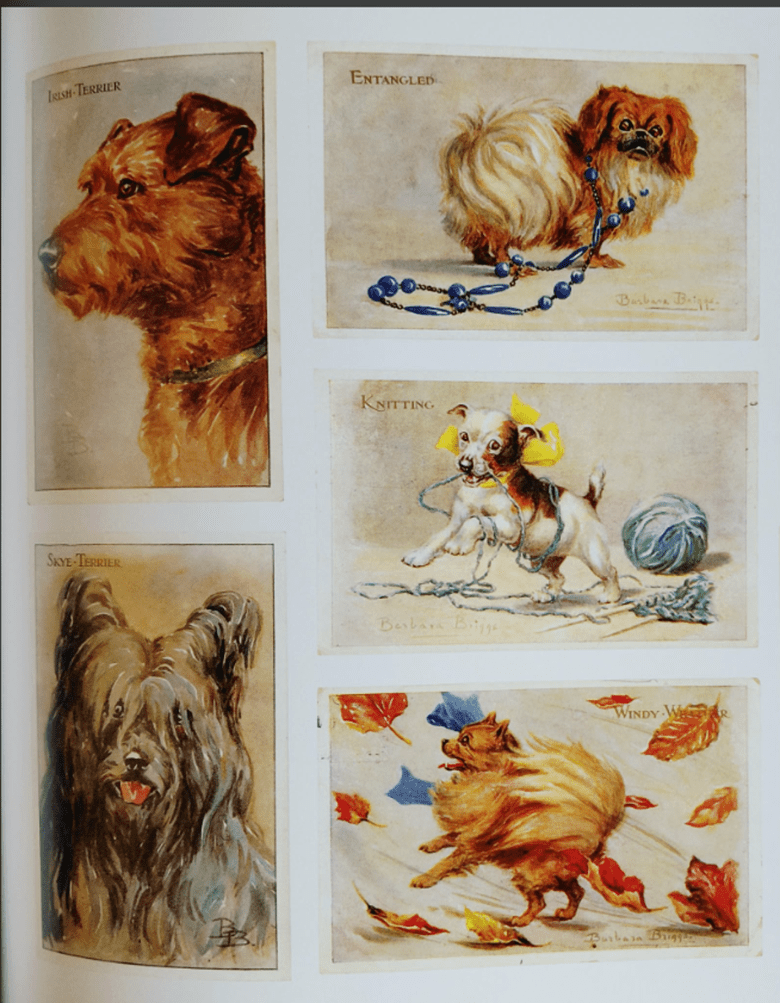
As a result, publisher Sir Humphrey Sumner Milford commissioned Barbara to produce animal pictures for books and postcards aimed at younger readers. Never happier than when painting animals, a passion she had developed from childhood, this commission opened doors for her in London.
As an only child educated at home by one of the wealthiest families in Wakefield, Barbara had access to notable people through her extensive family network. One of those was Henry Crowther, a curator at Leeds Museum, who delivered lectures to thousands of children about insects and animals.
He was popular in Altofts, where he delivered lectures for over 20 years on many topics. These included plants and animals and appealed to children and adults alike. Crowther and David Seth Smith, a zoologist and fellow member of the London Zoological Society, nominated Barbara for fellowship in 1925.
Women in the London Zoological Society
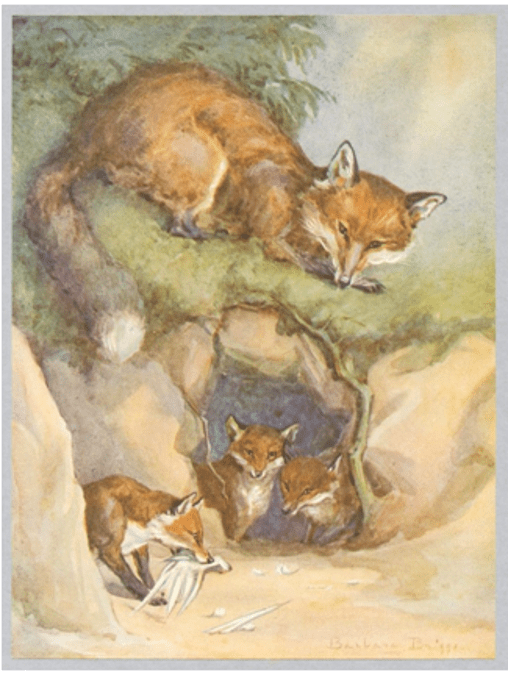
The London Zoological Society was one of the first learned societies to admit women as Fellows. There, they had equal status, terms and privileges as men. Once admitted, Barbara was surrounded by the legacies of powerful, talented and inspirational women. She rubbed shoulders with contemporaries such as Joan Proctor, suffragist and first female Curator of Reptiles at London Zoo. Other female Fellows included Eleanor Helme ,an author, radio broadcaster, journalist, and the national champion of the ladies’ Golfing league. Eleanor and Barbara collaborated on a series of books called “Friends of Field and Forest”. Barbara provided all the illustrations. Many plates from this book were sold to schools as accurate illustrations of animals found in the wild.
Following the death of her father, Barbara was able to spend more time studying animal anatomy at London Zoo. However her heart remained in her home town. She applied to be a Fellow in 1925, giving her address as Beechfield, Sandal, Wakefield. However, she wrote her application from an address in British Columbia, Canada.
A Woman Who Travelled Extensively
Her absence from home was due to her passion to study, draw and paint as many animals and plants from across the globe as she could. Canadian artist Katharine Maltwood, who holds several pieces in her collection, tells us that,
“Wishing to see wild nature (‘the wilder the better,’ she said), Mrs Woodward became an ardent traveller. On safaris through the steamy heat of central Africa’s jungle, she sketched all manner of wildlife. Her exotic trips took her to the frozen reaches of Europe’s Arctic wastelands.”
John & Katharine Maltwood Collection: History of the Collection – Barbara Woodward
Whilst travelling, Barbara’s work continued to be exhibited widely across the UK. Her illustrations became recommended study models for animal and botanical art in educational settings.
Edward John Tindal Woodward
It was during one of these trips that Barbara most likely first met Edward John Tindal Woodward. Indeed, they were both passengers on the Minnetonka sailing from New York to London during the autumn of 1931. It arrived on the 16th of November.
Frequent work trips between his home in California meant he travelled to and from Britain often. Having emigrated to America in 1889, he became a US citizen. In 1918, the authorities drafted him for service in the First World War, along with many others. His draft card records his occupation as an engineer and notes that he had lost his left hand to amputation, so they were unlikely to have pursued his enlistment.
In 1938, Edward registered his naturalisation certificate in Canada. Barbara and Edward married at the courthouse in Victoria, British Columbia on July 21st of the same year. The couple settled in Saanich, Royal Oak, a suburb of Victoria, on the tip of Vancouver Island. Barbara quickly became involved in the prestigious Island Arts and Crafts Society. The society was an important part of the artistic fabric of the province and contributed significantly to supporting the arts in Victoria and Vancouver for many years.
Barbara Briggs: Artist and Feminist Activist
Barbara exhibited in soe large solo exhibitions during the 1940s at the Vancouver Gallery. Coupled with local work, this quickly turned into a large commission for big game animal pictures. These decorated the walls of the luxury Canadian Pacific coastal passenger car ferries, Princess Patricia and Princess Marguerite.
After the Second World War, it became clear that women were losing rights they had fought long and hard to gain.. Barbara became a member of the Victoria Business and Professional Women’s Club.
During the late 1940s and into the 1950s, the club established itself as a professional association for employed women. Its members worked to address problems facing women at both local and national levels. As a result, policymakers consulted the club and it influenced political decisions at the highest level, particularly on issues affecting women of colour and race. The club defended the rights of single and married women to work, which was extremely controversial at the time. (History of BPW Canada)
Between 1947 and 1948, Barbara Woodward (née Briggs) was a director of this feminist association. She therefore played a fundamental role in the advancement of women’s rights in the workplace, education, and health.
Barbara Briggs’ Legacy
Barbara Briggs continued to produce art under her maiden name until she died, at the age of 89, on the 9th of August 1976. Her brushwork and skill in bringing animals to life earned her recognition across two continents. Schools throughout Britain used her full set of colour plates of British birds, and copies still sit on bookshelves today.
Barbara Briggs, along with her cousin Gertrude Briggs, was recognised with a Forgotten Women of Wakefield blue plaque. It is sited on 9 South Parade, Wakefield, where they were both regular visitors.
Press articles
Barbara Briggs: The Wakefield artist who took her talents across the world